
Download Link Below 📂🡻 1 Views
- Watch trailer
- Server 1vidrift.net

- Server 2vidy.st
- Server 3vidcore.io

- SERVER US HD
Synopsis
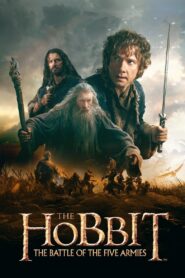
The Hobbit: The Battle of the Five Armies (2014) – Epic Fantasy Adventure
The Hobbit: The Battle of the Five Armies (2014) is an epic fantasy adventure film directed by Peter Jackson and based on the legendary literary world created by J.R.R. Tolkien. As the final installment of The Hobbit film trilogy, the movie concludes Bilbo Baggins’s extraordinary journey with a dramatic conflict involving dwarves, elves, humans, and powerful orc armies. Featuring Martin Freeman, Ian McKellen, Richard Armitage, Orlando Bloom, and Benedict Cumberbatch, The Hobbit: The Battle of the Five Armies combines spectacular battles, emotional character moments, and breathtaking fantasy landscapes.
The story begins after the events of The Hobbit: The Desolation of Smaug. The dragon Smaug has escaped from the Lonely Mountain and threatens the people of Lake-town. Meanwhile, Thorin Oakenshield and his company of dwarves have reclaimed the ancient dwarf kingdom of Erebor and discovered its enormous treasure. However, the victory comes with serious consequences as greed, suspicion, and the desire to possess the mountain’s wealth threaten to destroy the relationships between allies.
Bilbo Baggins, portrayed by Martin Freeman, finds himself caught between loyalty to his companions and his growing concern about Thorin’s behavior. As Thorin becomes increasingly obsessed with the treasure, Bilbo recognizes that the dwarf leader is losing sight of the values that originally united their company. His attempts to prevent further conflict become an important part of the story, demonstrating the courage of a small hobbit facing powerful rulers and warriors.
Thorin, played by Richard Armitage, must confront the consequences of his ambition and the burden of his family’s history. His desire to protect the Lonely Mountain is understandable, but his determination to control its wealth creates tension with the elves of Mirkwood and the survivors of Lake-town. The dispute over the treasure becomes more dangerous as rival groups gather outside Erebor, each believing they have a legitimate claim.
Gandalf, portrayed by Ian McKellen, continues his efforts to protect Middle-earth from a growing darkness. His investigations reveal that the conflict surrounding the Lonely Mountain is connected to a much larger threat. The rising power of the Orcs places the future of the region in danger, forcing previously divided groups to consider whether they can work together against a common enemy.
The film’s central conflict escalates when the armies of dwarves, elves, and men face the forces of the Orcs in a massive confrontation. This battle gives the movie its title and provides the foundation for its most ambitious action sequences. Each army brings its own fighting style, motivations, and leadership to the battlefield, creating a chaotic struggle that determines the future of the Lonely Mountain and the surrounding lands.
Legolas, played by Orlando Bloom, and Tauriel, portrayed by Evangeline Lilly, also play important roles as the conflict develops. Their experiences connect the wider battle with personal loyalties and the consequences of choosing whom to protect. Luke Evans appears as Bard, the human archer whose actions have already changed the fate of Lake-town, while Lee Pace portrays Thranduil, the Elvenking whose interests complicate the negotiations over Erebor.
Benedict Cumberbatch provides the voice and motion-capture performance for Smaug, bringing the dragon’s threatening presence to life. The film also features an extensive supporting cast that includes Graham McTavish, Aidan Turner, Dean O’Gorman, Ken Stott, and Billy Connolly. Together, these performers help create a broad fantasy world filled with distinctive cultures, rivalries, and heroic figures.
Peter Jackson’s direction emphasizes large-scale fantasy spectacle while maintaining the emotional threads established in the earlier films. The production combines elaborate practical sets, digital environments, detailed costumes, and extensive visual effects to portray the mountain kingdom and its surrounding battlefields. Howard Shore’s musical score further strengthens the atmosphere, connecting the film’s dramatic moments to the larger musical identity of Middle-earth.
Beyond its battles and visual effects, The Hobbit: The Battle of the Five Armies explores themes of greed, loyalty, leadership, sacrifice, and redemption. Thorin’s struggle demonstrates how the pursuit of wealth and power can threaten even the strongest friendships. Bilbo’s decisions illustrate the value of compassion and independent judgment, especially when powerful individuals become consumed by ambition.
As the conclusion of Bilbo’s adventure, the movie also connects The Hobbit trilogy with the larger world of The Lord of the Rings. It shows how events surrounding the Lonely Mountain contribute to the history of Middle-earth and shape the lives of characters who will appear in later stories.
Overall, The Hobbit: The Battle of the Five Armies is an epic fantasy adventure filled with memorable characters, intense confrontations, and spectacular battles. Its combination of Tolkien’s imaginative world, Peter Jackson’s filmmaking, and a large ensemble cast makes it a major entry in modern fantasy cinema. For viewers who enjoy dragons, legendary kingdoms, heroic journeys, and stories about the cost of power, this film delivers a dramatic conclusion to Bilbo Baggins’s remarkable adventure.


Original title The Hobbit: The Battle of the Five Armies
IMDb Rating 7.4 10 votes
TMDb Rating 7.34 15,905 votes
Director

Director
Cast

Gandalf the Grey

Bilbo Baggins

Thorin Oakenshield

Legolas

Tauriel

Bard

King Thranduil

Smaug / Sauron (voice)

Balin

Kili
Similar Movies & TV Shows