




Download Link Below 📂🡻 Select your preferred language from the audio options in the video player above. 30 Views
- Server 1Unknown resource

- SERVER US HD
Synopsis
Kajolrekha (2024): A Powerful Bengali Fantasy Romance Rooted in Folk Tradition
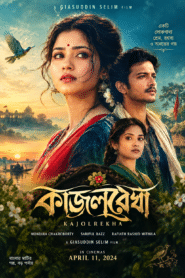
Kajolrekha is a Bengali fantasy-musical-romance film directed and written by acclaimed Bangladeshi filmmaker Giasuddin Selim. Released in Bangladesh on April 11, 2024, the movie brings an old Bengali folk narrative to the modern screen through music, romance, mystery, traditional culture, and dramatic storytelling. The film stars Mondira Chakroborty in the title role alongside Sariful Razz and Rafiath Rashid Mithila.
Inspired by the famous Maimansingha Gitika, the film explores a timeless story of love, fate, sacrifice, deception, and perseverance. Rather than presenting a conventional contemporary romance, the production creates a historical and folkloric atmosphere that takes audiences into a different period of Bengal. Director Giasuddin Selim has described the story as deeply connected to the cultural heritage and timeless traditions of Bengal.
Kajolrekha Movie Story and Plot
At the center of Kajolrekha is a young woman whose life becomes intertwined with destiny, hardship, and an extraordinary love story. The narrative is adapted from an old ballad that has remained part of Bengali literary and folk culture for generations.
The story follows Kajolrekha as she faces difficult circumstances that dramatically change the direction of her life. Her journey involves separation, mistaken identities, love, and the struggle to overcome circumstances beyond her control. A prince also becomes an important part of the story, creating a romantic relationship surrounded by obstacles and misunderstandings.
One of the film’s interesting storytelling elements is the use of secrecy and mistaken identity. Kajolrekha’s true identity becomes an important part of the dramatic conflict. This allows the story to explore how appearances and misunderstandings can affect relationships and alter people’s lives.
The narrative also includes elements of magical realism and folklore. A mysterious bird plays an unusual role in the story, adding a fantasy element to an otherwise emotionally grounded tale. This combination of romance, folklore, and fantasy gives the film a distinctive identity.
Kajolrekha and the Maimansingha Gitika Connection
One of the biggest reasons the movie attracts attention is its connection to Maimansingha Gitika, the celebrated collection of Bengali folk ballads. The source material contains stories that have been passed down through generations, making the film an attempt to bring an important part of Bengali cultural heritage to a contemporary cinematic audience.
Giasuddin Selim’s adaptation transforms this traditional material into a feature-length musical drama. The result combines period-inspired environments, folk music, romance, dramatic conflicts, and visual storytelling.
The film therefore works not only as a romance but also as a cultural experience. Viewers interested in Bengali folklore can find familiar cultural elements presented through a large-scale cinematic production. The Daily Star has described the film as being rooted in an old ballad and the cultural ethos of Bengal.
Kajolrekha Cast and Performances
Mondira Chakroborty plays the title character Kajolrekha. The film marked an important point in her acting career, and her performance received significant attention following the movie’s theatrical release. In an interview after the film’s release, Chakroborty discussed how audiences began associating her strongly with the character.
Sariful Razz plays Such Kumar, one of the principal characters in the story. His role is closely connected to the romantic and dramatic development of the narrative.
Rafiath Rashid Mithila appears as Kankan Dasi, another major character whose involvement becomes important to the story’s themes of identity and misunderstanding. The main cast is supported by actors including Sadia Ayman, Iresh Zaker, Khairul Basar, Sahana Sumi, Azad Abul Kalam, and others.
Azad Abul Kalam is particularly notable because he portrays multiple characters in the film. This gives the production another interesting performance element and demonstrates the variety of roles incorporated into the story.
Direction and Cinematic Style
Giasuddin Selim is known for films that focus strongly on Bengali culture, emotion, relationships, and social surroundings. With Kajolrekha, he moves into a more folkloric and period-inspired world.
The director’s approach emphasizes atmosphere as much as dialogue. Natural landscapes, traditional settings, costumes, music, and carefully designed environments contribute to the film’s distinctive visual identity.
The film was shot partly in Susang Durgapur, Netrokona, Bangladesh, helping create an environment suitable for the story’s historical and folkloric setting. IMDb lists Kamrul Hasan Khosru as cinematographer, with Iqbal Kabir Joel handling editing and Emon Chowdhury credited for composition.
Music and Folk Atmosphere
Music is one of the defining characteristics of Kajolrekha. Because the source material comes from Bengali folk tradition, songs are naturally integrated into the storytelling instead of functioning only as separate entertainment sequences.
The film’s musical identity helps establish the period atmosphere and emotional tone. Emon Chowdhury is credited as composer, while the soundtrack includes performances from singers such as Abanti Sithi, Antora Mondal, and Humaira Eshika.
The combination of traditional influences and cinematic arrangement allows the movie to connect an old folk narrative with modern filmmaking techniques.
Visuals, Sets, and Production
Creating a believable historical world requires extensive production design, costumes, sets, and locations. Kajolrekha places considerable emphasis on creating a visual environment that feels different from contemporary Bangladesh.
IMDb notes that more than 100 members of different Indigenous communities in Bangladesh participated in building sets for the film. This is an interesting production detail because it reflects the scale of effort involved in constructing the movie’s visual world.
The landscapes and production design help establish the film’s fairy-tale-like atmosphere. Rather than relying entirely on digital effects, the movie combines real locations, constructed environments, costumes, performances, and cinematography.
Themes of Love, Fate, and Identity
At its heart, Kajolrekha is a story about how people respond to circumstances they cannot easily control. Love is an important theme, but the film also examines identity, sacrifice, fate, deception, and perseverance.
The romantic relationship at the center of the narrative faces numerous obstacles. Instead of presenting love as something simple, the story places its characters in situations where decisions and misunderstandings have long-lasting consequences.
The identity theme is especially important because the characters do not always know the complete truth about one another. This creates suspense and allows the audience to remain interested in how the characters’ relationships will eventually develop.
Why Kajolrekha Is Different
There are several reasons Kajolrekha stands apart from many contemporary Bengali films. First, its source material comes from an important tradition of Bengali folk literature. Second, it uses a combination of fantasy, romance, music, and historical storytelling.
The movie also attempts to preserve a strong sense of Bengali cultural identity. Instead of simply borrowing a traditional story as a background, the production uses folk music, visual design, landscapes, costumes, and character-driven drama to build an entire cinematic world.
For viewers who enjoy stories based on folklore, Kajolrekha offers something different from modern urban dramas and conventional commercial romances.
Kajolrekha Movie Details
Movie Name: Kajolrekha
Release Year: 2024
Country: Bangladesh
Language: Bengali
Genre: Fantasy, Musical, Romance
Director: Giasuddin Selim
Writer: Giasuddin Selim
Main Cast: Mondira Chakroborty, Sariful Razz, Rafiath Rashid Mithila
Music: Emon Chowdhury
Cinematography: Kamrul Hasan Khosru
Editing: Iqbal Kabir Joel
Runtime: 156 minutes
Bangladesh Release Date: April 11, 2024
These production details are listed by IMDb and its associated credits pages.
Final Thoughts on Kajolrekha
Kajolrekha is an ambitious Bangladeshi Bengali film that brings an old folk narrative into contemporary cinema. Its combination of romance, fantasy, music, traditional culture, and dramatic storytelling gives it a distinctive place in modern Bangladeshi cinema.
The movie’s connection to Maimansingha Gitika makes it especially interesting for audiences who appreciate Bengali folklore and literary heritage. Giasuddin Selim’s direction, Mondira Chakroborty’s title performance, Sariful Razz’s presence, and Rafiath Rashid Mithila’s supporting role create the foundation for a story centered on love, identity, fate, and resilience.
With its 156-minute runtime, musical structure, elaborate visual world, and traditional influences, Kajolrekha offers an experience that is quite different from an ordinary modern romance. It is ultimately a cinematic interpretation of a centuries-old Bengali tale, presented through the language of contemporary filmmaking.
For viewers searching for a Bengali fantasy romance with cultural depth, folk storytelling, memorable characters, and a strong connection to Bengal’s literary heritage, Kajolrekha is a notable film to explore.
Original title কাজলরেখা
IMDb Rating 6.4 1k votes
TMDb Rating 8.333 3 votes
Director

Director
Cast

Kajolrekha

Such Kumar

Sadhu Sawdagar

Kankan Dasi

Sonadhor

Kajolrekha (young)
Download
Similar Movies & TV Shows