

Download Link Below 📂🡻 0 Views
- Watch trailer
- Server 1vidrift.net

- Server 2vidy.st

- Server 3vidcore.io

- SERVER US HD
Synopsis
Baahubali 2: The Conclusion – An Epic Story of Power, Love and Revenge
Introduction
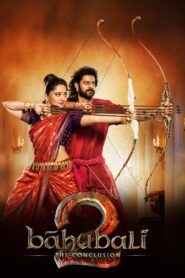
Baahubali 2: The Conclusion is a spectacular Indian epic film that combines royal drama, action, fantasy, family conflict, romance, and emotional storytelling. Released in 2017, the movie was directed by S. S. Rajamouli and features Prabhas, Rana Daggubati, Anushka Shetty, Ramya Krishnan, Sathyaraj, and Tamannaah Bhatia in important roles. The film continues the story of the fictional kingdom of Mahishmati and brings several unanswered questions from the first installment to a dramatic conclusion.
For audiences who enjoy grand historical settings, powerful characters, impressive visual effects, and large-scale cinematic storytelling, Baahubali 2: The Conclusion remains a notable title in Indian cinema. Its combination of personal relationships and political rivalry gives the story emotional weight beyond its spectacular action sequences.
Story and Plot Overview
Baahubali 2 story follows Amarendra Baahubali, a respected royal heir whose courage, kindness, and sense of justice make him popular among the people of Mahishmati. His growing influence, however, creates tension within the royal family. Bhallaladeva, who also wants power, becomes increasingly hostile toward Amarendra.
Queen Sivagami plays an important role in the kingdom’s future. Her decisions affect the succession, the royal family, and the political relationships surrounding the throne. What begins as a question of leadership gradually becomes a larger conflict involving loyalty, ambition, love, and betrayal.
As Baahubali 2 story unfolds, Amarendra encounters Devasena, a strong-willed princess whose independence and determination make her a memorable character. Their relationship develops alongside the political tensions, creating a conflict between personal happiness and royal responsibility.
The film also explores the complicated relationship between Amarendra and Kattappa, the loyal warrior who serves the kingdom. The mystery surrounding Kattappa’s actions is one of the central questions connecting the two films. The sequel reveals the events that led to the tragedy and explains how betrayal changed the fate of Mahishmati.
Meanwhile, Mahendra Baahubali discovers more about his heritage. Learning about his father’s legacy gives him a new understanding of his identity and the injustice that affected his family. His journey eventually becomes a struggle to challenge Bhallaladeva’s rule and restore justice.
Prabhas and His Powerful Performance
Prabhas delivers one of the central performances of the film by portraying Amarendra Baahubali and Mahendra Baahubali. Although the characters share a family connection, they have different personalities and experiences.
Amarendra is presented as a thoughtful leader who values the people around him. His strength is not limited to physical ability; he also demonstrates compassion, responsibility, and an understanding of leadership. These qualities help explain why many people support him as a future king.
Mahendra, by contrast, must discover his place in a world shaped by events that happened before his birth. His journey involves learning the truth about his family and deciding what kind of leader he wants to become.
Prabhas balances the heroic qualities of both characters with moments of emotion and determination. His performance helps connect the film’s family drama with its larger political conflict.
Rana Daggubati as Bhallaladeva
Bhallaladeva serves as the main antagonist and represents the destructive side of ambition. His desire to control Mahishmati drives much of the conflict. Rather than accepting a rival’s popularity and abilities, he becomes determined to secure power for himself.
Rana Daggubati gives the character an imposing screen presence. Bhallaladeva’s authority, pride, and hostility create a strong contrast with Amarendra’s approach to leadership.
The rivalry between the two characters is more than a contest of physical strength. It also represents two different ideas about power. One emphasizes responsibility toward the people, while the other treats control and dominance as the ultimate goals.
This contrast gives the royal conflict its dramatic foundation and makes the final struggle meaningful within the story.
Devasena: A Strong and Independent Character
Anushka Shetty portrays Devasena, one of the film’s most important characters. She is courageous, outspoken, and unwilling to surrender her principles simply to satisfy royal expectations.
Her relationship with Amarendra adds romance to the story, but she also has an important role in the political drama. Devasena’s decisions demonstrate that she has her own beliefs and is prepared to defend them.
The challenges she faces reveal the consequences of Bhallaladeva’s ambition and the restrictive environment created by his rule. Her character contributes to the film’s themes of dignity, freedom, and personal responsibility.
Kattappa and the Central Mystery
Kattappa, played by Sathyaraj, is a crucial figure in the Baahubali story. He is known for his loyalty, discipline, and commitment to the kingdom. However, his connection to Amarendra becomes complicated by the rules and obligations governing his position.
The question of why Kattappa killed Baahubali became one of the most widely discussed mysteries associated with the original film. The sequel addresses this question by revisiting the relationships and decisions that led to the event.
His character demonstrates how duty can become complicated when political authority conflicts with personal loyalty. Kattappa’s involvement gives the story a tragic dimension and helps connect the past with Mahendra’s mission.
Direction, Cinematography and Visual Effects
S. S. Rajamouli builds a fictional kingdom that feels expansive through its palaces, battlefields, costumes, architecture, and carefully designed environments. The production combines practical filmmaking with computer-generated imagery to create a larger-than-life atmosphere.
Cinematography by K. K. Senthil Kumar contributes to the film’s visual identity. Wide shots establish the scale of the kingdom, while closer compositions focus on the emotions of the characters. The visual presentation shifts between intimate conversations and enormous confrontations without losing sight of the central story.
The action sequences use dramatic staging and exaggerated heroic moments characteristic of epic fantasy cinema. Rather than presenting every conflict as an ordinary fight, the film turns many encounters into significant moments in the characters’ journeys.
The editing, production design, costumes, and visual effects work together to establish the world of Mahishmati. These elements help make the film distinctive for viewers who enjoy ambitious fantasy productions.
Music and Background Score
The music composed by M. M. Keeravani is another important part of the film’s identity. The soundtrack supports the romantic scenes, the emotional moments, and the larger conflicts involving the royal family.
The background score helps build anticipation before major confrontations and reinforces the emotional significance of key decisions. Songs contribute to the atmosphere of the fictional world while also highlighting the relationships between characters.
Music is especially important in a story of this scale because it helps connect the visual spectacle with the characters’ emotions. The score gives scenes of victory, loss, and determination an additional layer of dramatic intensity.
Major Themes of the Film
One of the main themes is leadership and responsibility. The story repeatedly asks what makes someone worthy of ruling a kingdom. Strength alone is not presented as enough; fairness, compassion, and responsibility are also important.
Another theme is ambition and betrayal. Bhallaladeva’s desire for control damages relationships and creates lasting consequences for the kingdom. The story illustrates how personal jealousy can influence decisions affecting many people.
Family and legacy also play significant roles. Mahendra must understand the history of his parents before deciding how to shape his own future. The past influences his choices, but he must ultimately take responsibility for his actions.
Finally, the movie explores love, loyalty, and sacrifice. Characters are repeatedly forced to choose between personal desires and obligations to others. These competing priorities give the epic story its emotional foundation.
Why Baahubali 2: The Conclusion Is Worth Discussing
The film brings together many elements associated with large-scale Indian cinema: memorable characters, dramatic dialogue, elaborate sets, action choreography, music, and an emotionally driven story. It also connects the events of the first movie to the eventual resolution of the larger conflict.
Viewers who enjoyed Baahubali: The Beginning may appreciate how the sequel expands the history of Mahishmati and provides further context for its characters. New viewers can also understand much of the central conflict, although watching the first film beforehand provides a clearer introduction to the relationships and unanswered questions.
The movie’s appeal comes from the balance between spectacle and personal drama. Its royal setting creates opportunities for impressive visual sequences, while the relationships among Amarendra, Devasena, Kattappa, Sivagami, and Bhallaladeva give those events emotional significance.
Final Verdict
Baahubali 2: The Conclusion is an ambitious epic that combines action, fantasy, romance, family conflict, and political drama. Prabhas leads the story with a dual performance, while Rana Daggubati, Anushka Shetty, Ramya Krishnan, and Sathyaraj help bring the fictional kingdom to life.
For fans of Indian epic films, the movie offers a memorable cinematic experience built around the struggle for justice and the consequences of ambition. Its large-scale production, recognizable characters, music, and dramatic resolution make it an important entry in the Baahubali series.
If you are preparing a movie information page for iScreenbd, include the film’s cast, release year, genre, runtime, synopsis, and official viewing information. Make sure any streaming or download links you publish are authorized and accurately described.
Baahubali 2


Original title బాహుబలి 2: ది కన్ క్లూజన్
IMDb Rating 8.2 10 votes
TMDb Rating 7.497 900 votes
Director

Director
Cast

Mahendra 'Sivudu' Bāhubali / Amarendra Bāhubali

Bhallaladeva

Devasena

Karikala Kattappa Nadar

Bijjaladeva

Sivagami

Kumara Varma

Avanthika

Official in Kunthala Kingdom

Sanga
Similar Movies & TV Shows