

Download Link Below 📂🡻 0 Views
- Watch trailer
- Server 1vidrift.net

- Server 2vidy.st
- Server 3vidcore.io

- SERVER US HD

Black Panther: Wakanda Forever 2022 Epic Marvel Adventure
Forever.Nov. 09, 2022162 Min.405K
Synopsis
Black Panther: Wakanda Forever (2022) – Movie Story, Cast and Review
Black Panther: Wakanda Forever (2022) is a Marvel superhero movie that combines action, emotional storytelling, political conflict, and the introduction of a powerful new civilization. Directed by Ryan Coogler, the film continues the story of Wakanda following the loss of King T’Challa. It explores grief, leadership, responsibility, and the challenges facing a nation determined to protect its people and traditions.
With Letitia Wright leading the cast as Shuri, the film expands the Marvel Cinematic Universe through new characters, underwater kingdoms, and spectacular action sequences. It also pays tribute to the legacy of T’Challa while developing the future of Wakanda.
Black Panther: Wakanda Forever Movie Overview
The story takes place after the death of King T’Challa, leaving Wakanda to face an uncertain future. Queen Ramonda assumes greater responsibility for protecting the kingdom, while Shuri struggles with personal grief and the loss of her brother.
Wakanda’s advanced technology and valuable vibranium resources attract international attention. Other nations want access to the rare metal, creating political pressure and new security concerns. At the same time, Wakanda encounters a hidden underwater civilization whose leader believes his people must be protected from outside threats.
These circumstances bring together two powerful societies with different histories and priorities. The resulting conflict challenges Wakanda’s leadership and forces Shuri to reconsider what protecting her people truly means.
Black Panther: Wakanda Forever Story and Plot
At the beginning of the film, Wakanda is mourning the loss of its king. Queen Ramonda and Shuri attempt to move forward while maintaining the country’s independence. Their grief affects them in different ways, particularly as they face growing threats from beyond their borders.
The situation becomes more complicated when the existence of vibranium beneath the ocean leads to the discovery of Talokan, an advanced underwater civilization. Its ruler, Namor, fears that the outside world will eventually threaten his people. He approaches Wakanda with demands that place both nations on a dangerous path.
Shuri becomes central to the unfolding events as she investigates the new threat and searches for ways to protect Wakanda. Her scientific intelligence helps her understand the situation, but the conflict also requires her to confront difficult emotional and moral questions.
As tensions increase, the characters must decide whether diplomacy, retaliation, or compromise offers the best path forward. The story builds toward a confrontation that tests the strength of Wakanda and the determination of its people.
Black Panther: Wakanda Forever Cast and Characters
The movie features returning Marvel characters alongside several important new additions.
Letitia Wright as Shuri
Angela Bassett as Queen Ramonda
Lupita Nyong’o as Nakia
Danai Gurira as Okoye
Winston Duke as M’Baku
Tenoch Huerta Mejía as Namor
Dominique Thorne as Riri Williams
Florence Kasumba as Ayo
Martin Freeman as Everett K. Ross
Michaela Coel as Aneka
Letitia Wright delivers a central performance as Shuri, whose intelligence and personal struggles shape the story. Angela Bassett brings authority and emotional depth to Queen Ramonda, while Lupita Nyong’o and Danai Gurira continue to portray characters dedicated to Wakanda’s protection.
Tenoch Huerta introduces Namor as a complex leader whose decisions are shaped by his people’s history and security. Dominique Thorne appears as Riri Williams, a gifted young inventor whose technology becomes important to the conflict.
Wakanda and the Kingdom of Talokan
One of the film’s major strengths is its expansion of the world introduced in the first Black Panther movie. Wakanda remains a technologically advanced nation with distinctive traditions, architecture, and cultural identity.
Talokan offers a different vision of an advanced society. Its underwater setting, colorful environments, and unique mythology create a visual contrast with Wakanda. Namor’s leadership reflects the challenges of protecting a civilization that has remained hidden from the outside world.
The relationship between these nations raises questions about isolation, national security, historical oppression, and the responsibility of powerful societies. These themes give the film depth beyond its superhero battles.
Action, Visual Effects and Music
Black Panther: Wakanda Forever features large-scale action, underwater sequences, advanced technology, and elaborate production design. The contrast between Wakanda and Talokan creates opportunities for visually distinctive scenes.
The film’s costume design and cinematography help establish the identity of each civilization. The soundtrack and musical score support both the emotional moments and the more intense confrontations.
Rather than focusing exclusively on spectacle, the filmmakers use the action to develop the central conflict. Battles carry personal and political consequences for the characters, reinforcing the film’s themes of loyalty, grief, and responsibility.
Black Panther: Wakanda Forever Movie Review
Black Panther: Wakanda Forever is a thoughtful addition to the Marvel Cinematic Universe. Its emotional foundation distinguishes it from many conventional superhero adventures, while its new characters and settings broaden the franchise’s mythology.
The performances by Letitia Wright and Angela Bassett are particularly important to the film’s emotional impact. Namor also stands out as an antagonist with understandable motivations, making the conflict more complicated than a simple struggle between good and evil.
However, the film’s lengthy runtime and multiple storylines may feel demanding for some viewers. Its balance of emotional drama, political themes, and action also gives it a different tone from lighter Marvel movies.
Final Verdict
Black Panther: Wakanda Forever (2022) tells a story about loss, courage, leadership, and the future of a remarkable nation. With powerful performances, impressive world-building, and the introduction of Talokan and Namor, it expands the Black Panther story in meaningful ways.
For Marvel fans and viewers who enjoy superhero movies with emotional depth, political conflict, and spectacular visuals, this film is worth exploring. It honors the legacy of T’Challa while placing Shuri and Wakanda’s future at the center of the story.

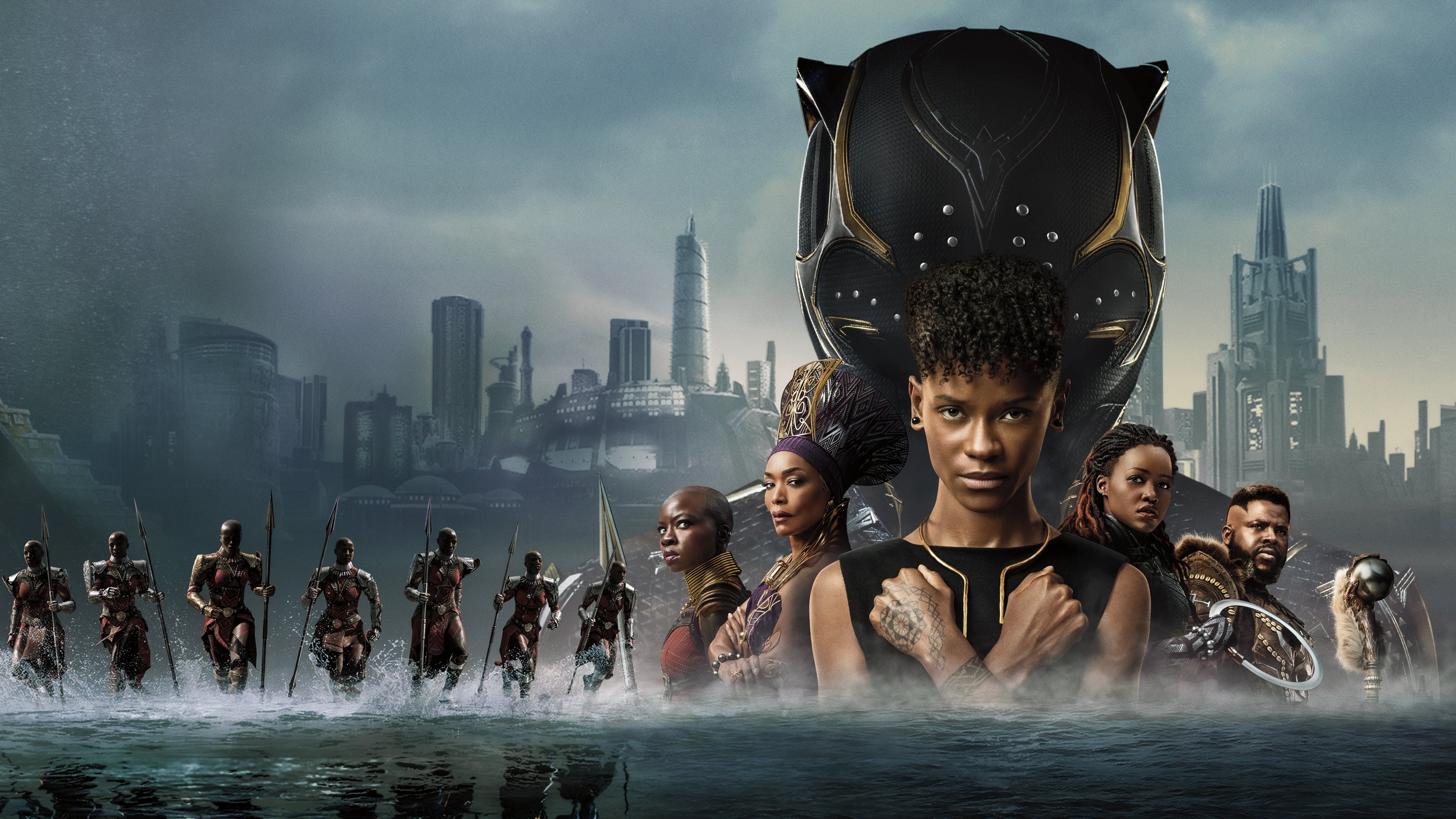


Original title Black Panther: Wakanda Forever
IMDb Rating 6.6 10 votes
TMDb Rating 6.985 7,902 votes
Director

Director
Cast

Shuri

Namor

Nakia

Okoye

M'Baku

Ramonda

Everett Ross

Valentina Allegra de Fontaine

Riri
Download
Similar Movies & TV Shows